Yo, what’s up everyone! I’m a supplier in the trawlers game, and today I wanna chat about the capacity of a trawler’s fishing hold. It’s a topic that’s super crucial for fishermen, and I’ve got some real – world insights to share with you all. Trawlers

First things first, let’s talk about why the fishing hold capacity matters. When you’re out on the open sea, time is money. You don’t want to head back to shore just because your trawler’s hold is full. A larger fishing hold means you can stay out longer, catch more fish in one trip, and ultimately boost your profits. It’s like having a bigger trunk in your car when you’re going on a shopping spree – you can bring back more goodies.
The capacity of a trawler’s fishing hold isn’t just a random number. It’s determined by a bunch of factors. One of the main ones is the size of the trawler itself. Obviously, a huge ocean – going trawler is gonna have a way bigger hold than a small in – shore one. For those small, near – shore trawlers that are maybe 20 – 30 feet long, their fishing holds might have a capacity of around 500 to 2000 cubic feet. That can hold a fair amount of smaller fish like mackerel or sardines, but if you’re going after bigger species like tuna, the quantity might be much less.
On the other hand, the big commercial trawlers, the ones that roam the deep seas and can be over 100 feet long, can have fishing holds with capacities ranging from 10,000 to 50,000 cubic feet or even more. These monsters are built to take on long – distance fishing expeditions and bring in massive hauls. They’re like the semi – trucks of the fishing world, designed to transport large volumes of fish back to port.
Another factor that affects the hold capacity is the design of the trawler. Some trawlers are built with multiple compartments in the fishing hold. This can be really useful because it allows fishermen to separate different types of fish. For example, you might want to keep the delicate shellfish away from the more robust finfish. But having multiple compartments also means that the overall usable space in the hold can be a bit less efficient compared to a single, large open – plan hold.
The shape of the fishing hold also plays a role. A well – designed hold will have smooth, rounded corners to prevent fish from getting stuck in hard – to – reach places. And it should have proper drainage systems to keep the fish dry and fresh. If the hold is poorly designed, it can lead to wasted space and a higher risk of spoilage.
Now, let’s talk about how to measure the capacity of a fishing hold. It’s not as simple as just measuring the length, width, and height and multiplying them together. You have to take into account the irregular shape of the hold, the space taken up by the structural components like beams and bulkheads, and the fact that you can’t pack the fish in there like solid blocks.
One common way to estimate the hold capacity is to use a volumetric method. You measure the internal dimensions of the hold at various points and then use mathematical formulas to calculate the approximate volume. But this is just an estimate. In reality, the actual amount of fish that can be stored depends on how the fish are packed. If they’re packed tightly and in an organized way, you can fit more in.
The type of fish you’re catching also affects how much you can actually store in the hold. Some fish, like herring, are small and can be stacked neatly, allowing you to make the most of the available space. Others, like large sharks, are bulky and take up a lot of room. And let’s not forget about the ice. Fishermen usually pack ice in the hold to keep the fish fresh. The ice takes up space too, so you have to factor that in when considering the overall capacity.
As a trawler supplier, I know that different fishermen have different needs when it comes to fishing hold capacity. Some small – scale fishermen might be perfectly happy with a trawler that has a relatively small hold because they’re only going out for short trips and targeting local fish. They might value other features like maneuverability and fuel efficiency more.
But for the big – time commercial operators, a large hold capacity is a must. They’re looking to maximize their catch and make the most of every trip. That’s why we offer a range of trawlers with different hold capacities to meet the diverse needs of our customers.
If you’re in the market for a trawler, it’s important to think carefully about your fishing goals and how much fish you realistically expect to catch. Don’t just go for the biggest hold you can find if you don’t need it. You’ll end up paying more for a trawler that has a lot of unused space and might be less efficient to operate.
On the flip side, if your fishing operations are expanding and you’re planning to go after larger catches or longer trips, then upgrading to a trawler with a bigger hold could be a smart move. It can help you stay competitive in the fishing industry and increase your bottom line.
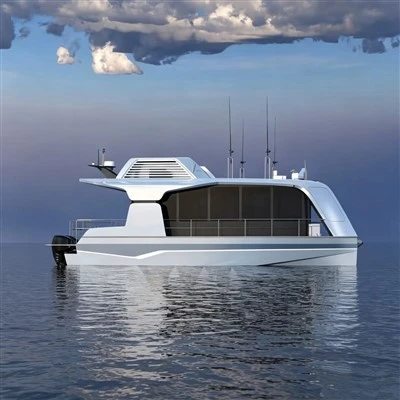
So, if you’re interested in learning more about our trawlers and finding the perfect one with the right fishing hold capacity for your needs, don’t hesitate to get in touch. We’re here to answer all your questions and help you make the best decision for your fishing business. Whether you’re a newbie just starting out or an experienced fisherman looking to upgrade, we’ve got the trawler solutions for you. Reach out to us and let’s start a conversation about how we can get you the trawler that’s just right for you.
Trawlers References
- Fisheries Science Journals on Trawler Design and Capacity
- Industry Reports on Commercial Fishing Vessel Specifications
Longkou Jinda Shipping Co., Ltd.
With abundant experience, we are one of the most professional trawlers manufacturers and suppliers in China. Please feel free to buy high quality trawlers made in China here from our factory. We also accept customized orders.
Address: North of Shuangyu Village, Xingjia Sub-district, Longkou City, Yantai City, Shandong Province
E-mail: Leo99999@qq.com
WebSite: https://www.jindaship.com/
