Hey there, folks! I’m here as a supplier of stamping robots, and today we’re gonna dig into a really interesting question: Can a stamping robot work with different stamping dies? Stamping Robot
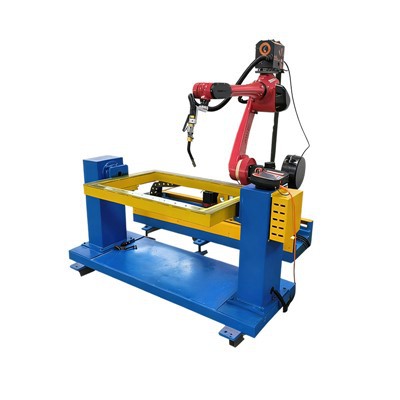
Let’s start by understanding what stamping robots and dies are. A stamping robot is like a super – handy worker in a factory. It’s designed to handle the stamping process, which involves shaping metal sheets into various forms. On the other hand, stamping dies are the tools that give the metal its specific shape. They’re like the molds that the robot uses to create different products.
Now, the short answer is yes, a stamping robot can work with different stamping dies. But there are a bunch of factors that come into play, and I’ll break ’em down for you.
Compatibility and Adaptability
First off, compatibility is key. You see, not all stamping robots can just pick up any stamping die and start working. The robot has to be designed in a way that it can physically handle the weight and size of the die. For example, if you have a small, lightweight robot, it’s not gonna be able to lift a huge, heavy die.
Most modern stamping robots are built with some level of adaptability. They’ve got adjustable grippers or tool changers that can hold different types of dies. These grippers can be adjusted to fit the shape and size of the die, ensuring a secure hold during the stamping process.
Let’s say we’re talking about automotive parts manufacturing. You might have different dies for making car doors, fenders, or engine parts. A good stamping robot can be programmed to work with each of these dies. The programming allows the robot to adjust its movements, speed, and force according to the requirements of the specific die.
Programming and Flexibility
Programming is another crucial aspect. To make a stamping robot work with different dies, you need to have the right programming in place. The robot has to know how to position the die correctly, how much force to apply, and how to move the metal sheet through the stamping process.
Modern stamping robots come with user – friendly programming interfaces. You don’t need to be a super – techy genius to program them. With a bit of training, factory workers can easily input the necessary data for different dies.
For instance, if you’re switching from a simple flat – stamping die to a more complex three – dimensional die, the programming will need to be updated. The robot will have to adjust its path to follow the contours of the new die. This kind of flexibility is what makes stamping robots so valuable in a manufacturing environment.
You can also use offline programming. This means that you can program the robot while it’s not in operation. You can simulate the stamping process with different dies on a computer, making sure that everything is working smoothly before you actually start production.
Tool Changers and Quick Die Change Systems
One of the coolest features that allow stamping robots to work with different dies is the tool changer. A tool changer is like a butler for the robot. It can quickly swap out one die for another. This is a huge time – saver in a production line.
Let’s say you’re running a production line that makes different types of electronic enclosures. You might need to switch between dies every few hours. With a tool changer, the robot can do this in a matter of minutes, instead of hours.
Quick die change (QDC) systems are also becoming more and more popular. These systems are designed to make the process of changing dies even faster and more efficient. They use hydraulic or pneumatic systems to lock and unlock the dies quickly. The robot can then move on to the next stamping job without much downtime.
Maintenance and Calibration
When a stamping robot works with different dies, maintenance and calibration become even more important. Each die has its own set of requirements, and the robot needs to be in top – notch condition to work with them effectively.
Regular maintenance of the robot’s mechanical parts, such as the grippers and tool changers, is essential. You need to check for wear and tear, and replace any parts that are starting to fail.
Calibration is also crucial. Different dies might require different levels of precision. You need to calibrate the robot’s sensors and actuators to ensure that it can position the die accurately and apply the right amount of force.
For example, if a die is used for making high – precision medical components, the robot needs to be calibrated to a much higher level of accuracy compared to a die used for making simple household items.
Benefits of Using a Stamping Robot with Different Dies
There are some really great benefits to having a stamping robot that can work with different dies.
First of all, it increases production flexibility. You can easily switch between different products without having to invest in multiple robots. This is especially useful for small and medium – sized enterprises that might not have the budget to buy a whole fleet of robots.
It also reduces costs. By being able to use the same robot with different dies, you save on the cost of purchasing additional equipment. You also save on labor costs because you don’t need as many workers to operate different machines.
In addition, it improves product quality. The robot can be programmed to apply consistent force and movement to each die, ensuring that the stamped products are of high quality and have less variation.
Challenges and Solutions
Of course, there are some challenges when it comes to getting a stamping robot to work with different dies. One of the main challenges is die setup. Each die needs to be set up correctly on the robot, which can be time – consuming and requires some skill.
To solve this problem, some manufacturers are developing self – setting dies. These dies can automatically align themselves with the robot’s tooling system, reducing the setup time and human error.
Another challenge is the compatibility of the control systems. Different dies might require different control parameters, and it can be tricky to integrate these parameters into the robot’s control system.
To address this, many stamping robot suppliers are offering more advanced control systems that can easily adapt to different die requirements. These systems can store multiple sets of control parameters for different dies, making it easy to switch between them.
So, What’s the Bottom Line?
In conclusion, a stamping robot can definitely work with different stamping dies. With the right design, programming, tool – changing systems, and maintenance, it can be a versatile and valuable asset in a manufacturing plant.
If you’re in the market for a stamping robot that can handle different dies, you’re in the right place! We’ve got a range of stamping robots that are designed to be flexible and adaptable. Our robots come with user – friendly programming interfaces, advanced tool changers, and reliable control systems.
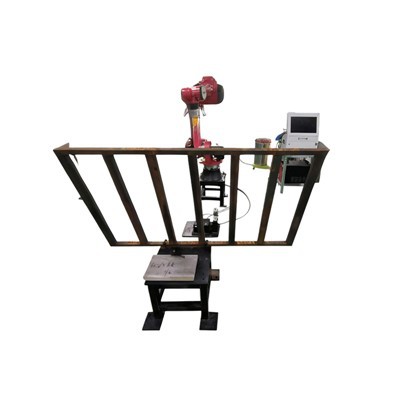
Whether you’re in the automotive, electronics, or any other manufacturing industry, our stamping robots can help you increase production efficiency, reduce costs, and improve product quality.
Nail Gun Robot If you’re interested in learning more about our stamping robots and how they can work with different stamping dies for your business, don’t hesitate to reach out. Let’s have a chat and see how we can help you take your production to the next level.
References
- "Automated Stamping Systems: Technology and Applications" by John Smith
- "Advanced Robotics in Manufacturing Processes" edited by Jane Doe
- Industry reports from leading manufacturing associations
Dongguan Chuanglida Intelligent Equipments Co., Ltd.
As one of the most professional stamping robot manufacturers and suppliers in China, we also support customized service. Please feel free to buy discount stamping robot in stock here from our factory. For price consultation, contact us.
Address: Room 201, Building 2, No. 61, Shachang 1st Road, Dalang Town, Dongguan City, Guangdong Province
E-mail: haoguangli001@outlook.com
WebSite: https://www.boruntestech.com/
