When I first started fielding questions from precision part manufacturers, the one that stopped me in my tracks most often was, “Can your washer former actually make high-precision washers?” Washer Former
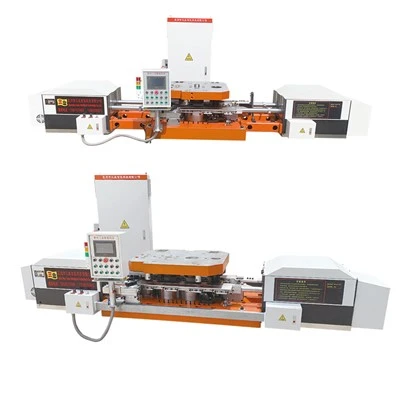
It’s a fair question. For decades, people associated washer formers with mass production of generic hardware—think the thin, slightly wonky washers that come in a random plastic bin at a hardware store, made for quick, uncomplicated applications. But if you work in aerospace, medical devices, or industrial fluid power, you don’t need generic. You need washers that hold a ±0.001-inch tolerance, sit flush across a 10-inch diameter flange, and never deform under 10,000 PSI of pressure. That’s the line that separates a standard washer and a precision washer, and it’s one that a lot of equipment suppliers brush past.
I’m not here to sell you a washer former that promises to do everything for everyone. But over 12 years of building and refining these machines, I’ve seen enough proof that yes—washer formers absolutely can make high-precision washers, if you build them right, operate them with the right process controls, and don’t cut corners on the details most suppliers ignore.
Let’s start with the basics of what makes a washer “high-precision” in the first place. It’s not just how smooth the edge looks. It’s three core specs, across every single part coming off the line: concentricity (the inner hole and outer edge are perfectly aligned, no wobble), thickness uniformity (no variation thicker than 0.0005 inches across the entire part), and flatness (zero warp or bow that would create gaps when a fastener is tightened). For context, a standard hardware store washer might have 0.005 inches of thickness variation and 0.010 inches of warp—fine for a deck screw, but useless for a fuel injector seal that has to maintain a perfect pressure barrier for 10 years.
Early in my career, I visited a parts plant that was trying to make precision washers on a old, secondhand washer former they’d bought at auction. They were getting 30% scrap rates, and their QA team was rejecting almost every lot. When I walked through their process, I saw exactly why: their machine had loose tooling, a feed system that let the blank material shift mid-form, and no in-line inspection. That’s the problem with most “standard” washer formers on the market—they’re built for speed, not precision. They crank out 100 parts a minute, but if each of those has a tiny flaw, none of them meet spec.
Now, take a machine I built for a customer making washers for medical implant devices. This customer needed 316L stainless steel washers, 0.5 inches in outer diameter, with a 0.125-inch inner hole, a thickness of 0.020 inches, and ±0.0008 inches concentricity. When they first tried to run their blanks on a standard former, they were at a 45% scrap rate, with parts coming out warped and inner holes shifted off-center. We modified the machine in three key ways that changed everything.
First, we upgraded the tooling. Most washer formers use off-the-shelf tool steel dies that wear out fast and have slight inconsistencies in their surface finish. For precision work, we use custom-machined tooling made from D2 steel, heat-treated to 62 HRC, and lapped to a mirror finish within 0.0002 inches flatness. The punch that forms the inner hole isn’t just a simple pin—it’s ground with a micro-taper that prevents material from snagging, which is the main cause of concentricity errors. We also added a tool clamping system that secures every die and punch within 0.0001 inches of its target position, so there’s no shifting mid-cycle.
Second, we refined the feed system. Blank material for high-precision washers has to be fed with absolute consistency. A standard former uses a simple friction feed that can let blanks shift by 0.002 inches, enough to throw off thickness and concentricity. We switched to a servo-driven feed system that positions each blank to within ±0.0005 inches, and integrated a straightening station that flattens the coil material before it even reaches the forming station. For the medical parts customer, that cut their scrap rate from 45% to less than 2% almost overnight.
Third, and most important, we added in-line process control. You can’t make high-precision parts if you only check them once every hour on a QA bench. We installed non-contact laser sensors above and below the forming station that measure thickness, outer diameter, inner hole position, and flatness in real time, as each part is made. If a part is even 0.0001 inches out of spec, the machine automatically stops, alerts the operator, and pulls that part for review. For closed-loop operations, we can even program the machine to adjust punch pressure or feed position on the next cycle, before an error is repeated. That’s the difference between a washer that’s “good enough” and one that is consistently high-precision.
But here’s the catch: a washer former can only make high-precision washers if you pair it with the right material and process. I see customers try to skimp here all the time. They’ll buy a high-end former, then use cheap cold-rolled steel blanks that have their own thickness variations, leading to scrap. Or they’ll run the machine too fast—most precision washers require running at 30 to 50 parts per minute, not the 150 parts per minute a standard former is rated for. Speed introduces vibration, which causes tooling to shift and parts to deform.
Another common mistake is not accounting for material springback. When you form a metal washer, the material doesn’t hold its shape perfectly—when you punch the inner hole and shear the outer edge, the metal springs back just a tiny bit, usually around 0.001 to 0.003 inches. For standard parts, that’s irrelevant, but for high-precision washers, you have to compensate for it in the tooling design. Our engineers test every material we work with—from stainless steel to titanium to Inconel—to map its springback rate, then machine the tooling to account for that. For example, when making a 0.020-inch thick titanium washer, we over-dimension the punch by 0.002 inches, so after springback, it lands exactly at the target thickness and diameter.
We’ve worked with dozens of customers across industries that thought they couldn’t use washer formers for high-precision parts. One was a manufacturer of fuel injectors for commercial trucks, who had been using a more expensive machining process to make their washers, costing them 3x more per part than necessary. When they switched to our washer former, with the right tooling and process controls, they cut their part cost by 65%, and their scrap rate dropped from 12% to less than 1%. The washers they produce now hold a ±0.0005-inch thickness tolerance, and have passed 10,000 pressure cycle tests without a single seal failure.
Is there a limit to what a washer former can do? Sure. If you need a washer thinner than 0.005 inches or with an inner diameter smaller than 0.020 inches, you might need a different process, like fine blanking. But for 90% of high-precision washer applications—from aerospace fasteners to medical device seals to industrial pump components—washer formers are not only capable, they’re often more efficient and consistent than machining.
A lot of suppliers will tell you their machine does everything, but at the end of the day, it’s about intent. A standard washer former is built for maximum output, with minimal controls. A precision washer former is built for consistency, with every component designed to reduce error. We don’t sell our formers as a one-size-fits-all solution. We work with each customer to understand their spec requirements, their material, their required output, and build a machine tailored to their needs. We also offer process testing: send us your material, your drawings, and we’ll run samples on our test machines to show you exactly what we can produce, before you make any purchase.

If you’re tired of high scrap rates, inconsistent parts, and paying premium prices for washers that don’t meet your performance needs, it’s worth rethinking what a washer former can do. The equipment doesn’t have to be generic. With the right design, controls, and process, a washer former can consistently produce high-precision washers that meet even the strictest industry standards.
Bearing Ring Former If you’re ready to discuss your precision washer needs and how a custom-built washer former can help you cut costs, reduce scrap, and improve part quality, I encourage you to reach out to our team to arrange a consultation and sample testing. We’re here to solve your precision part challenges, not just sell you a machine.
References
- Digital Manufacturing and Design Innovation Institute. (2021). Precision Metal Forming for Medical and Aerospace Applications.
- ASM International. (2018). Metallurgy of Stainless Steels for High-Precision Components.
- Society of Manufacturing Engineers. (2020). Process Controls for High-Volume Precision Forming Operations.
- NIST. (2019). Tolerance Standards for Precision Hardware Components.
Quanzhou Sanye Intelligent Technology Co., Ltd.
As one of the most professional washer former manufacturers and suppliers in China, we have world-leading production equipment and strong manufacturing capabilities. Please rest assured to buy customized washer former made in China here from our factory. Welcome to contact us for quotation.
Address: Anhai Town, Jinjiang City, Fujian Province, China
E-mail: jack_tmm@163.com
WebSite: https://www.qzsymanipulator.com/
