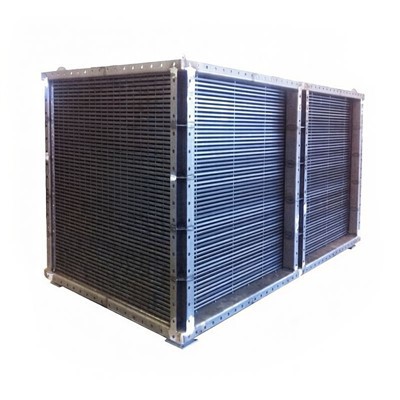
As a condenser supplier deeply entrenched in the industry, I’ve witnessed firsthand the pivotal role condensers play in numerous applications, from industrial refrigeration to power generation. However, it’s crucial to acknowledge that while condensers are essential for these processes, they also carry significant environmental implications. In this blog, I’ll delve into the various environmental impacts of condensers and discuss potential solutions to mitigate these effects. Condenser
Energy Consumption and Greenhouse Gas Emissions
One of the most prominent environmental impacts of condensers is their energy consumption. Condensers are integral components of refrigeration and air – conditioning systems, as well as power plants. In refrigeration and air – conditioning, condensers work to release heat absorbed from the cooled space to the environment. This process requires a substantial amount of energy, typically in the form of electricity.
In power plants, condensers are used to convert steam back into water after it has passed through the turbines. This condensation process helps maintain the efficiency of the power generation cycle. However, large amounts of energy are needed to operate the pumps and fans associated with condensers.
The high energy demand of condensers has a direct correlation with greenhouse gas emissions. Most electricity is generated from fossil fuels such as coal, natural gas, and oil. When these fuels are burned to produce electricity, they release carbon dioxide (CO₂), methane (CH₄), and nitrous oxide (N₂O) into the atmosphere. These greenhouse gases trap heat, leading to global warming and climate change.
For example, in a large industrial refrigeration system, the condenser’s energy consumption can account for a significant portion of the overall energy bill. If this energy comes from fossil – fuel – based power plants, it can contribute to a substantial amount of CO₂ emissions over time.
Water Consumption and Pollution
Many condensers rely on water as a cooling medium. In water – cooled condensers, water is circulated through the condenser to absorb heat from the refrigerant or steam. Once the water has absorbed the heat, it is discharged back into the environment, usually a nearby body of water such as a river, lake, or ocean.
This water – based cooling process can lead to several environmental issues. Firstly, it requires a large amount of water. In some regions, this high water demand can strain local water resources, especially during periods of drought. For instance, a large power plant with a water – cooled condenser can consume millions of gallons of water per day.
Secondly, the discharged water is often warmer than the ambient water temperature. This thermal pollution can have a negative impact on aquatic ecosystems. Elevated water temperatures can reduce the amount of dissolved oxygen in the water, which is essential for the survival of fish and other aquatic organisms. It can also disrupt the natural breeding and migration patterns of aquatic species.
In addition to thermal pollution, the water used in condensers may contain chemicals such as corrosion inhibitors, biocides, and scale inhibitors. When this chemically – treated water is discharged into the environment, it can contaminate the water supply and harm aquatic life.
Refrigerant Leakage
In refrigeration and air – conditioning condensers, refrigerants are used to transfer heat. Many traditional refrigerants, such as chlorofluorocarbons (CFCs) and hydrochlorofluorocarbons (HCFCs), are known to be harmful to the environment. CFCs have been found to deplete the ozone layer, which protects the Earth from harmful ultraviolet (UV) radiation. Although the production of CFCs has been phased out under the Montreal Protocol, some older refrigeration systems may still contain these substances, and leaks can occur during maintenance or due to system failures.
HCFCs are also ozone – depleting substances, although they have a lower ozone – depletion potential compared to CFCs. In addition to ozone depletion, both CFCs and HCFCs are potent greenhouse gases. When they are released into the atmosphere, they can contribute to global warming.
Newer refrigerants, such as hydrofluorocarbons (HFCs), do not deplete the ozone layer. However, they have a high global warming potential (GWP). For example, some HFCs have a GWP that is thousands of times greater than that of CO₂. Leakage of these high – GWP refrigerants from condensers can significantly contribute to climate change.
Mitigating Environmental Impacts
As a condenser supplier, I recognize the importance of addressing these environmental impacts. There are several strategies that can be employed to minimize the negative effects of condensers on the environment.
Energy – Efficiency Improvements
One of the most effective ways to reduce the energy consumption of condensers is to improve their efficiency. This can be achieved through the use of advanced condenser designs, such as microchannel condensers. Microchannel condensers have a higher heat – transfer efficiency compared to traditional condensers, which means they can achieve the same cooling effect using less energy.
In addition, the implementation of variable – speed drives (VSDs) on condenser fans and pumps can help optimize energy consumption. VSDs allow the speed of the fans and pumps to be adjusted according to the actual cooling demand, reducing energy waste during periods of low load.
Water – Saving Technologies
To reduce water consumption, air – cooled condensers can be used as an alternative to water – cooled condensers in some applications. Air – cooled condensers use air to dissipate heat, eliminating the need for large amounts of water. Although air – cooled condensers may have a slightly lower efficiency compared to water – cooled condensers, technological advancements have improved their performance in recent years.
Another approach is to implement water – recycling systems in water – cooled condensers. These systems treat and reuse the water, reducing the overall water demand. Additionally, the use of advanced water – treatment technologies can minimize the amount of chemicals used in the cooling water, reducing the risk of water pollution.
Refrigerant Management
Proper refrigerant management is crucial to prevent refrigerant leakage. This includes regular maintenance and inspection of refrigeration systems to detect and repair leaks promptly. In addition, the transition to low – GWP refrigerants is an important step in reducing the environmental impact of condensers. Many new refrigerants with lower GWP are now available on the market, and they can provide a more environmentally friendly alternative to traditional high – GWP refrigerants.
Conclusion
Condensers are essential components in many industrial and commercial processes, but they also have significant environmental impacts. From high energy consumption and greenhouse gas emissions to water consumption and pollution, and refrigerant leakage, the environmental challenges associated with condensers are complex.
However, as a condenser supplier, I am committed to promoting sustainable solutions. By improving energy efficiency, reducing water consumption, and implementing proper refrigerant management, we can minimize the environmental footprint of condensers.
Evaporator If you are in the market for condensers and are looking for environmentally friendly options, I invite you to reach out to discuss your specific needs. Our team of experts can provide you with tailored solutions that balance performance and environmental responsibility.
References
- Akash, B., & Arjunan, T. S. (2008). Thermal analysis of condensers in refrigeration and air – conditioning systems. Renewable and Sustainable Energy Reviews, 12(1), 281 – 297.
- Barzegar, S., & Asadi, M. (2017). A review of energy – efficient technologies for condensers in power plants. Energy Conversion and Management, 147, 101 – 112.
- Koeppel, B. (1995). Cooling the Heavens: The发明, Development, and Future of Refrigeration. Wiley.
- O’Neill, B. C., & Oppenheimer, M. (2002). Climate change and thermal power generation: Water – cooling constraints. Climatic Change, 53(1 – 2), 135 – 164.
- Wang, T., & Xu, X. (2019). Environmental impact assessment of different refrigerants used in condensers. Journal of Cleaner Production, 228, 667 – 676.
Xiangshui Derkang Refrigeration Equipment Co., Ltd.
As one of the most professional condenser manufacturers in China, we’re featured by quality products and low price. If you’re going to buy discount condenser, welcome to get quotation from our factory. We also accept customized orders.
Address: No. 2, Xiaojian Town Entrepreneurship Park, Xiangshui County
E-mail: 505745223@qq.com
WebSite: https://www.xsderk.com/
