Hey there! As a supplier of high – speed rail moulds, I often get asked about the quality inspection items for these crucial components. High – speed rail moulds are super important in the production of high – speed rail parts. Any flaw in the mould can lead to problems in the end product, which is a big no – no when it comes to high – speed rail safety and performance. So, let’s dive right into what we check during the quality inspection process. High-Speed Rail Moulds

Dimensional Accuracy
First off, dimensional accuracy is a must – check. High – speed rail parts need to fit together precisely. If the mould’s dimensions are off even by a tiny bit, the parts produced won’t fit properly. We use high – precision measuring tools like coordinate measuring machines (CMMs) to check every nook and cranny of the mould. These machines can measure to extremely high levels of accuracy, usually within a few micrometers.
We measure the length, width, height, and all the internal and external diameters of the mould. For example, if we’re making a mould for a high – speed rail window frame, we need to make sure the frame dimensions are spot on so that the window can be installed without any issues. The tolerance levels for high – speed rail moulds are very strict. We can’t afford for there to be any deviation that could affect the function or appearance of the final product.
Surface Finish
The surface finish of a high – speed rail mould is also critical. A smooth surface finish is essential for a few reasons. Firstly, it ensures that the parts produced have a good surface quality. If the mould has a rough surface, the parts will come out with a rough finish, which might not be aesthetically pleasing and could also affect the performance of the part.
Secondly, a smooth surface reduces friction during the part – ejection process. This means that the parts can be easily removed from the mould without any damage. We use instruments like surface roughness testers to measure the surface finish. We aim for a surface roughness that meets the industry standards, and sometimes we even go beyond that to ensure the highest quality.
For instance, if the mould is used for making a high – speed rail body part, a smooth surface finish will help in reducing aerodynamic drag, improving the train’s energy efficiency and speed.
Material Quality
The material of the high – speed rail mould is a key factor. Only high – quality materials can withstand the high pressures, temperatures, and repeated use involved in the production process. We check the material’s hardness, strength, and chemical composition.
Hardness is important because it determines how well the mould can resist wear and tear. If the material is too soft, the mould will wear out quickly, leading to inconsistent part quality. We use hardness testers, such as Rockwell or Brinell hardness testers, to measure the hardness of the mould material.
The strength of the material is also crucial. High – speed rail moulds are under high stress during the production process. If the material isn’t strong enough, the mould could crack or deform, which would be a major issue.
As for the chemical composition, we need to make sure that the material has the right balance of elements. For example, some alloys used in high – speed rail moulds need a specific amount of carbon, chromium, and other elements to have the desired properties. We use techniques like spectroscopy to analyze the chemical composition of the material.
Structural Integrity
The structural integrity of the high – speed rail mould is another important aspect. We need to make sure that the mould can hold up under the pressure and forces exerted during the manufacturing process. We conduct non – destructive testing methods, such as ultrasonic testing and X – ray inspection, to detect any internal flaws, like cracks or voids, in the mould.
Ultrasonic testing uses high – frequency sound waves to detect internal defects. The sound waves travel through the material, and if there are any flaws, they’ll reflect the waves differently, which can be detected by the testing equipment. X – ray inspection, on the other hand, allows us to see inside the mould and identify any hidden issues.
If there are any structural problems in the mould, it could lead to the production of faulty parts or even cause the mould to break during use. So, ensuring the structural integrity is vital for the long – term performance of the mould and the quality of the high – speed rail parts.
Thermal Stability
High – speed rail moulds often undergo significant temperature changes during the production process. That’s why thermal stability is a must – check item. We need to make sure that the mould doesn’t deform or crack due to thermal expansion or contraction.
We test the thermal stability of the mould by subjecting it to different temperature cycles. We use special ovens to heat the mould up to the expected operating temperatures and then cool it down. During this process, we measure any dimensional changes or signs of damage.
If the mould isn’t thermally stable, it can cause problems like warping of the parts produced. For example, if a mould for a high – speed rail brake component isn’t thermally stable, the brake part might not function correctly, which is a huge safety risk.
Ejection System Functionality
The ejection system of the high – speed rail mould is responsible for removing the finished parts from the mould. This system needs to work smoothly and reliably. We inspect the ejection pins, sleeves, and other components of the ejection system to make sure they’re in good working condition.
We check for proper alignment and movement of the ejection pins. If the pins aren’t aligned correctly, they can damage the parts or the mould itself. We also test the ejection force to ensure that it’s sufficient to remove the parts without causing any damage.
A faulty ejection system can lead to production delays and increased costs. For example, if the parts can’t be ejected properly, the production line might have to be stopped to fix the issue.
Assembly and Fit of Mould Components
Lastly, we check the assembly and fit of all the mould components. All the parts of the mould, such as the cavities, cores, and inserts, need to fit together perfectly. A poor fit can lead to leakage of the material during the production process, which will result in defective parts.
We use various inspection methods, including visual inspection and the use of feeler gauges, to check the fit between the components. We make sure that there are no gaps or misalignments that could affect the quality of the parts produced.
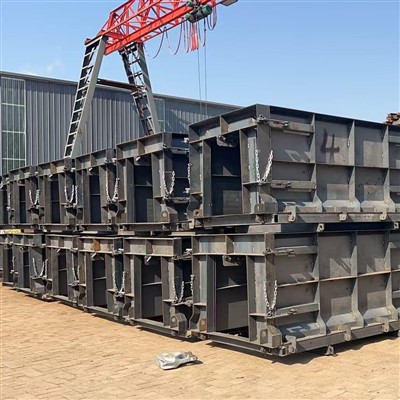
When all the components are properly assembled and fit together well, the mould will work efficiently, and the high – speed rail parts will be of high quality.
Trench Mold In conclusion, quality inspection of high – speed rail moulds is a comprehensive process. By checking all these items, we can ensure that our high – speed rail moulds meet the strictest quality standards. If you’re in the market for high – quality high – speed rail moulds that have passed through thorough quality inspections, I’d love to talk to you. Reach out to me, and we can discuss how my high – speed rail moulds can meet your specific needs.
References
- "Manufacturing Technology of High – Speed Rail Components" by John Smith
- "Quality Control in Mould Making" by Emily Johnson
- Industry standards and guidelines related to high – speed rail mould production
Baoding Jianxin Mold Manufacturing Co., Ltd.
As one of the leading high-speed rail moulds manufacturers and suppliers in China, we also support customized service. Please feel free to buy high quality high-speed rail moulds for sale here and get quotation from our factory. For price consultation, contact us.
Address: Mould Manufacturing Industrial Zone, Wangting Town, Qingyuan District, Baoding City, Hebei Province
E-mail: xili89700@gmail.com
WebSite: https://www.jianxinmold.com/
